The Biggest Obstacle
An Essay on the Search for Self
In over fifty years of searching for Self, I have been privy to different institutions, methods, and the approaches of fellow travellers — all treading the same ancient road toward a barely sensed goal. Each approach carries its own merit. Each institution that has coalesced around a founder, mythical or real, is built on deep spiritual values that aim to keep alive the flame of the eternal quest.
Fellow travellers come from different walks of life, all fired by a zeal to reach somewhere — toward a goal that has many guides and guiding principles. Cosmologies abound. The universe is defined on the basis of logical and mythical principles that seem to have the final word on what it actually is. Each definition logically grades the levels of existence, using metaphor, myth, gods, or natural law as a means to establish what it is all about.
All of these ideas are taken to heart by aspirants on this path. They morph, inevitably, into Scripture — read, heard, learned, and assimilated as the only means of perceiving truth. This facsimile of truth is then passed on to new entrants as an initiatory offering, facilitating their entry into the chosen way.
I do not mean to sound cynical. There is no other way but to join the long line before the altar where one offers the self in service to the Self. But there is a problem — and it is the problem of knowledge. That replica of true insight, coated in language and the directed thought of the person transmitting it, carries nuances of the personal: interpretations weighted with cultural prejudice, slants introduced by caste, class, and creed. All of this pre-digests the morsel that reaches the seeking spirit.
I speak from experience. I have made these overtures in serious, honest effort to pass on knowledge that genuinely altered my perception of life — knowledge that brought meaning and purpose and expanded my view of the world and my place within it. Yet, when I observe well-meaning friends reciting the letter of the law to new aspirants, I worry.
Where does search end and belief begin?
The words of the wise — sages who discovered ephemeral truths through long, dedicated seeking — become, over time, diktat. Their way of speaking, of walking, even their sartorial choices, are adopted as formulas that lend the aura of wisdom to those who wear the attire but do not carry the inner wisdom and understanding it once draped.
The question is a vexed one. If the outward forms are not upheld, how does one keep the inner core alive? Symbols are essential aids on a path that offers no firm footholds. Yet those same symbols, overused and repeated, slowly begin to prevent real enquiry — masquerading as the truth they were once meant to represent. And those who serve the rule of the symbol become high priests of realities they can speak of but have never truly entered.
As the temple of the Spirit, the body mind needs to be purified so that it can actually represent the Truth of the Spirit.
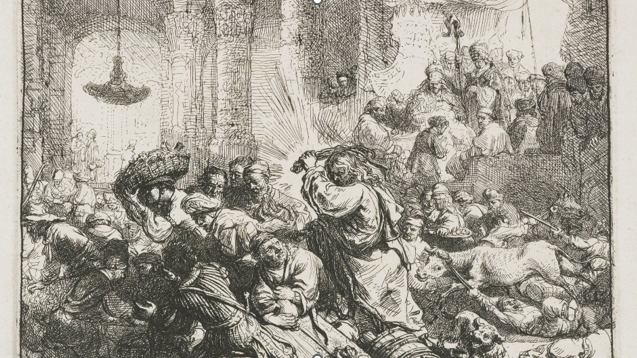
Rembrandt van Rijn — Christ Driving the Money Changers from the Temple (1635) Etching and dry point. Public domain.
“The psychosomatic organism is the potential instrument through which the Spirit may act. But for the right order to be established, so that the body mind may obey the Spirit, one’s attachment to the lower world needs to be sacrificed for the sake of the higher; that is what can make it sacred” Ravi Ravindra; The Yoga of the Christ, TPH,1990
Satan and Mara are described as Obstacles on the path to truth. They have mostly been interpreted as forces that offer worldly temptation — to test those on the threshold of enlightenment. But beyond the mountains of gold and the alluring forms they conjure, they offer the most potent cup of all to deviate the seeking heart from the quest: power.
Relinquishing the quest for gold or sensory pleasure is a clear renunciation. But power, in its subtlest manifestations, can beguile the human heart into believing that it still serves the One — with all its energies, with all its conviction. The sleight of hand is barely visible. The self-deception is covered by the belief that action proceeds from a deep understanding of the Unity of Being — all the while beguiled by the form that masquerades as the true son of God.
Where does true virtue lie? What signs signify its location within the human heart?
When does the expedient cross the line — betraying true alignment with the sacred, and becoming instead an accomplice in the quest for power?
The degradation of pristine symbols, the corruption of articulations born from genuine vision — this is natural across centuries. The shortcuts and deceptions that accompany the wanton use of the sacred for political gain and personal aggrandizement are strewn across the history of humanity.
For us, now, it is time to ask: What am I for? To what do I owe allegiance as I live out the days given to me on this earth? How true a representative can I be of the One life that pervades all there is? What must I do to fulfil the purpose for which I was born?
May we be honest enough to pass the test.