
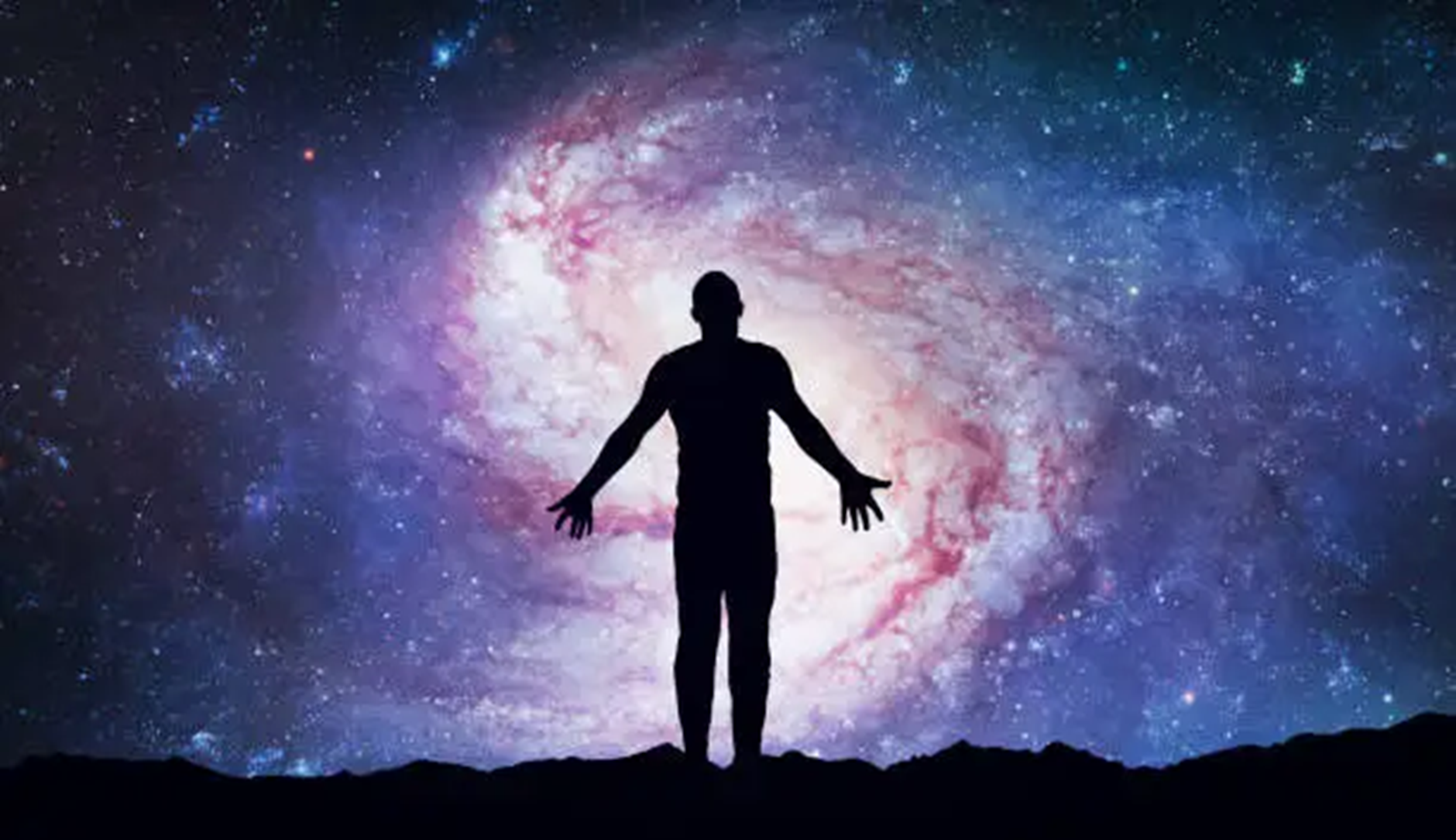
For many years I have awakened each morning with an unbidden sense of gratitude for life as a gift of this vast and mysterious universe. I have often wondered whether this gratitude is a learned moral posture—shaped by culture, ethics, and habit—or whether it arises instead as an expression of a deeper state of being, one that visits us only at certain moments. What is it in us that feels gratitude? And why is it that this state can be accessed so fully at times, and yet remain elusive at others?
These questions have accompanied me in recent weeks, and this morning, during meditation, there arose a quiet but unmistakable moment of clarity. I saw that only when one is truly present—rooted in stillness, inwardly aligned—does a profound sense of connectedness emerge, one that encompasses all beings and all forms of sentience. In that state, the quality of one’s being becomes an orchestration of oneness: love, compassion, gratitude, and wonder are no longer separate qualities but expressions of a single, unified perception.
In Beelzebub’s Tales to His Grandson, G. I. Gurdjieff repeatedly emphasizes that human beings ordinarily live in a state of forgetfulness, cut off from their true nature. Only through conscious presence does one begin the work of “self-remembering,” a condition in which one senses one’s place within the greater harmony of existence. Real understanding and right feeling arise only when a human being becomes aware of himself as part of the whole cosmic order, rather than as a separate and isolated entity. Gratitude, in this sense, is not an attitude adopted by the mind, but a resonance that emerges when one’s being is aligned with reality as it is.
In everyday language, gratitude is often reduced to thankfulness—a moral or social obligation governed by convention and courtesy. While such gratitude has its place, it does not possess the same ontological depth as the gratitude that arises in moments of awareness and presence. True gratitude is inseparable from the knowing of one’s interconnectedness with all that exists: the recognition that we share substance, energy, and origin with every form in the cosmos. We are vibrations within an immeasurable field of being; our crystallized forms differ only in degree, not in essence, from the stars, the dust, and the silent matter of space. Our lineage is stellar—born of the same forces that cause galaxies to ignite and dissolve.
The Buddha teaches, “When this is, that is. From the arising of this comes the arising of that.”
Gratitude, from this perspective, is not a reaction to favourable circumstances, but a natural response to seeing clearly the dependent co-arising of all things. When separateness dissolves, appreciation arises spontaneously. Not because one ought to be grateful, but because there is nothing outside oneself from which one could be separate.
Such wonder is accessible only in moments of deep stillness and presence. In those moments, one recognizes the truth of one’s being: that its essential quality is compassionate, loving, and unifying. This realization gives rise to a gratitude that is not a moral duty but an intrinsic feature of awakened perception.
St. John of the Cross gestures toward this inner transformation when he writes that the soul, once emptied of self-will and illusion, becomes capable of receiving divine life directly. In The Ascent of Mount Carmel, he observes that when the soul is quieted and stripped of its attachments, it is filled with a loving awareness that surpasses understanding. Gratitude here is a silent response to participation in a reality greater than the self.
In this way, I feel, gratitude reflects a state of self-remembering: a remembrance of our deepest nature and of our inseparable bond with all of creation. It is a recognition not only of what has been given, but of what we are. When presence reveals being as it truly is, gratitude arises as an echo of our divine origin and our belonging to the whole.